Underage Drinking
Talk, They Hear You Campaign
Start Talking Before She Heads Off To School

It’s never too early to have a conversation about alcohol and other drugs. The sooner you talk about the dangers of underage drinking and substance use, the greater chance you have of influencing your child’s decisions about using alcohol and other drugs. For tips on how—and when—to begin the conversation, visit www.underagedrinking.samhsa.gov
Underage Drinking - Truths, Myths and Why it Matters
Truths About Underage Drinking
- Alcohol is the most commonly used substance among underage youth.
- Most teens do not drink, even though it may seem common.
- Drinking alcohol at a young age can interfere with brain development, which continues into the mid-20s.
- Youth who drink are more likely to experience injuries, academic challenges, and mental health struggles.
- Underage drinking increases the risk of risky behaviors, including unsafe driving and poor decision making.
- Binge drinking greatly increases the risk of serious harm.
- Reducing access to alcohol and setting clear expectations helps lower youth alcohol use.
- Delaying alcohol use reduces the risk of substance related problems later in life.
Common Myths About Underage Drinking
- “Everyone is doing it.”
- “Alcohol is safer than other drugs.”
- “Letting teens drink at home teaches responsibility.”
- “It is not a serious issue anymore.”
- “Trying alcohol once or twice cannot cause harm.”
Why This Matters
Underage drinking affects not only individual health but also families, schools, and the broader community. Prevention efforts that focus on education, clear norms, and supportive environments help young people make healthier choices and reduce long-term risk.
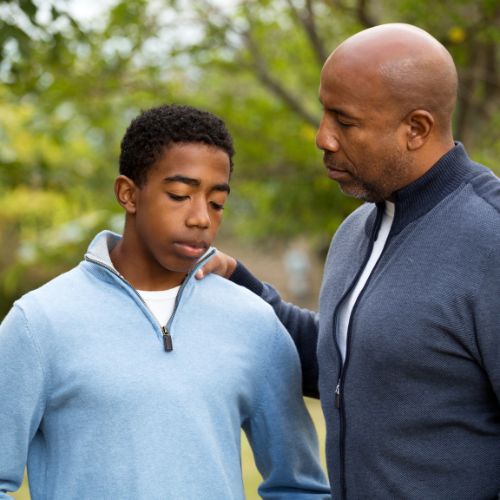
For Parents & Caregivers - Talking to your Teens
- Remind them that their brain is still developing, which is why alcohol and other drugs are especially harmful for anyone under the age of 21.
- Use everyday opportunities to talk with them—in the car, during dinner, or while watching TV.
- Let them know you’re always there for them.
- Encourage them to get involved in sports and other extracurricular activities.
- Help boost their confidence by teaching them different ways to say “no” to alcohol and other drugs and reminding them that real friends won’t pressure them to use substances.
- Reassure them that things will get easier, and reinforce that alcohol and other drugs aren’t a solution.
- Consider using a written or verbal agreement that outlines your expectations and family rules about alcohol and other drugs.
Social Hosting - Understand the Law
Connecticut Social Host Law
Connecticut has a strict “Social Host” or “House Party” law, passed in 2021, that holds parents and property owners liable for underage drinking and/or cannabis use that occurs in their homes.
The law prohibits anyone who owns or controls private property, including a dwelling unit, from recklessly, or with criminal negligence, permitting anyone under age 21 to illegally possess alcohol in the unit or on the property. Existing law prohibits knowingly allowing such possession.
The law also requires any such person who knows that a minor possesses alcohol illegally to make reasonable efforts to stop it. The act extends liability for failure to halt possession to a person who acts recklessly or with criminal negligence.
The penalty for violation is a class A misdemeanor, punishable by a maximum one year imprisonment or up to a $2000 fine.
The Person in control does not have to be present, does not have to be aware of the drinking, nor do they have to be an adult to be held liable.
![DMHAS_LEO_Cheat_Sheet__1_[45]_Page_2](https://ncpncoalition.org/wp-content/uploads/2025/11/DMHAS_LEO_Cheat_Sheet__1_45_Page_2-scaled.jpg "DMHAS_LEO_Cheat_Sheet__1_[45]_Page_2")
![DMHAS_LEO_Cheat_Sheet__1_[45]_Page_1](https://ncpncoalition.org/wp-content/uploads/2025/11/DMHAS_LEO_Cheat_Sheet__1_45_Page_1-scaled.jpg "DMHAS_LEO_Cheat_Sheet__1_[45]_Page_1")